Dense, gummy, or flat. And nobody told you why.
You followed the steps. The loaf still came out like a brick, and the recipe had no page for that.
Three plain-spoken handbooks: how to bake a crackling loaf from ordinary flour, how to read a bread label and a flour bag before you spend a penny, and how to run a sourdough starter and fix any loaf that goes wrong.
Instant PDF downloadSecure checkout3 books, 249 pages


You followed the steps. The loaf still came out like a brick, and the recipe had no page for that.
The clock in the recipe was somebody else's kitchen. Yours runs colder, or warmer, and the dough knows it.
So you added flour. Then more flour. Now it's dry and dense and you're not sure which mistake you made.
"Multigrain", "artisan", "no artificial preservatives". Seven dollars for a loaf that never molds. Something feels off and you can't say what.
Bread machine, Dutch oven, banneton, lame, spray bottle. Still no crust worth listening to.
Feed it, wait, guess when bulk is done, cut into the loaf and find a gummy line at the bottom.
All-purpose, bread, strong, T55, 00, heritage, stone-ground. Which one, and does the protein number on the bag matter?
Ice cubes, foil pans, a bowl of water. Which one works and why.
None of that is a character flaw. It's missing instruction.
A recipe shows you one loaf on one day. These books teach you to read the dough, the label, and the failed loaf, so the next one is yours.
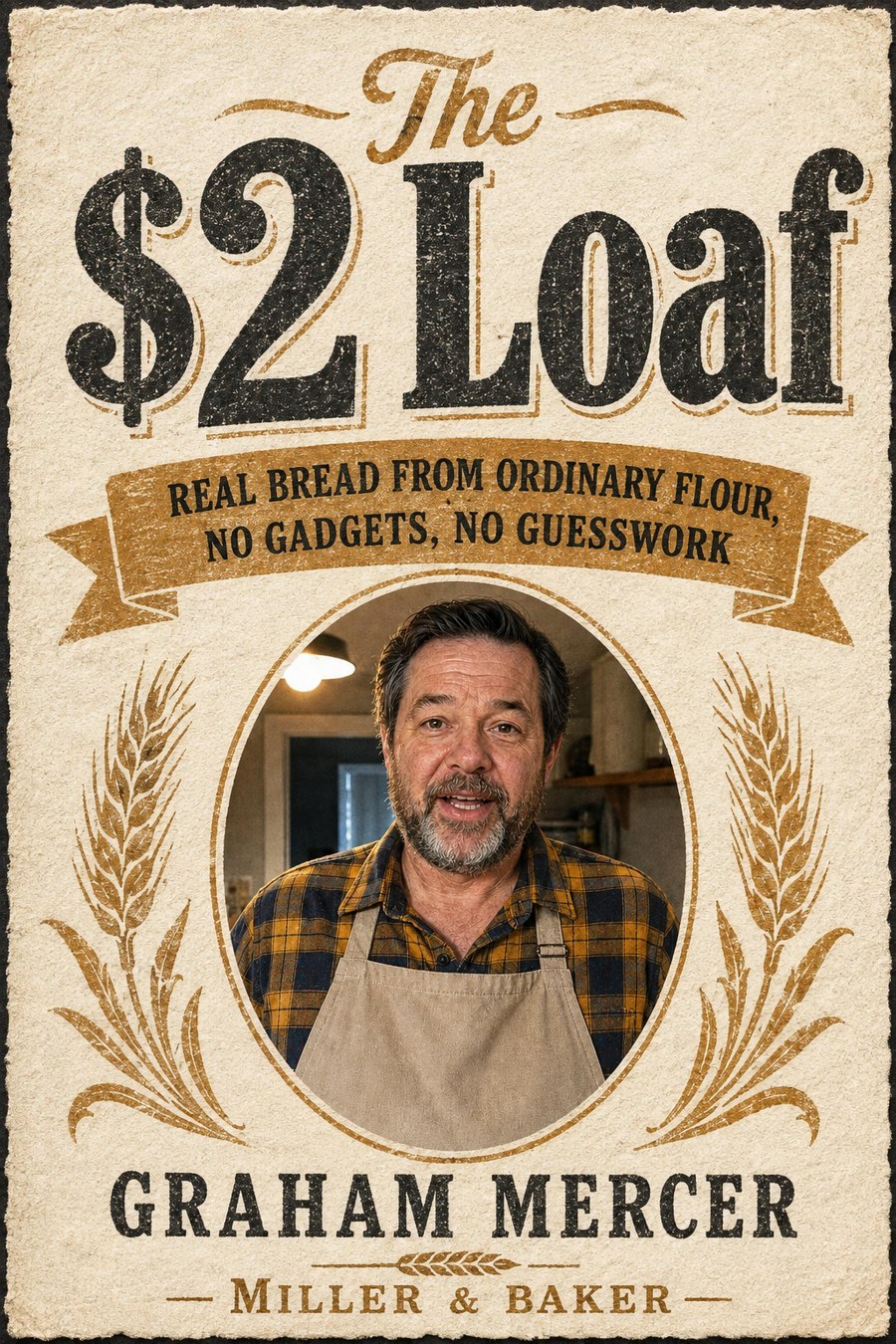
Real Bread From Ordinary Flour, No Gadgets, No Guesswork
"A loaf tells you what happened. Learn to listen before you change the recipe."
This is the book I wish someone had handed me at nineteen. Four ingredients, a bowl, a tin, an oven. I show you how to read the dough instead of the clock, how to use 2 grams of yeast instead of 8 and why it tastes better, and I give you a five-loaf drill so your first month ends with a loaf you can repeat on a Tuesday night. No starter, no machine. That comes later, if you want it.
93 pages · PDF
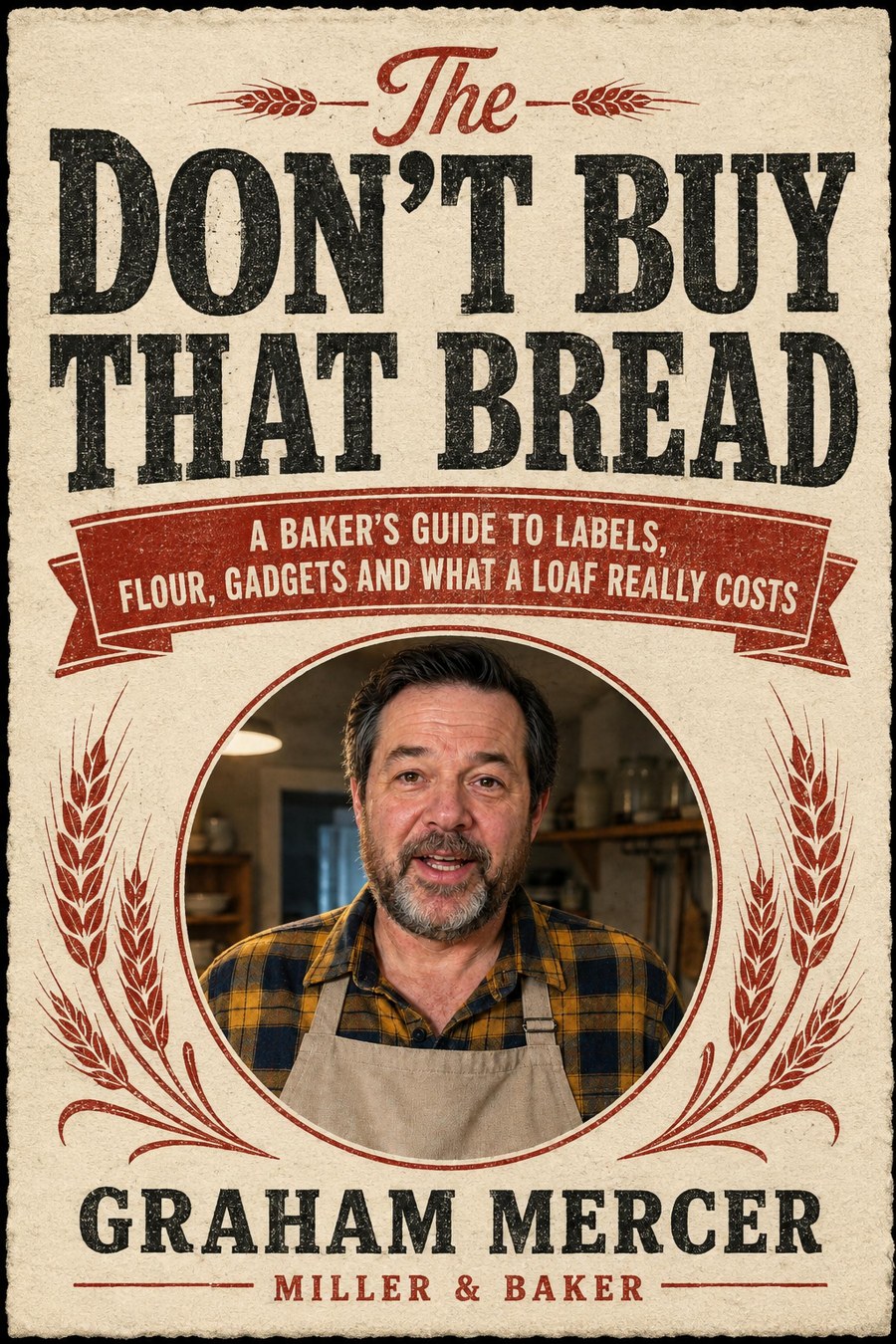
A Baker's Guide to Labels, Flour, Gadgets and What a Loaf Really Costs
"The price is on the front. The truth is usually on the back."
No baking in this one. This is the book for the shop. Sixty seconds on the back of the packet and you know what you're paying for. A loaf that refuses to mold, twelve brand names from one bakery, what a certification can and cannot prove. Then the flour bag: protein, extraction, "enriched", what each costs per loaf. Then the Gadget Court, where the bread machine, the air fryer, the Dutch oven and the grain mill each get a verdict and a free alternative. No health claims. Just how to decide.
96 pages · PDF
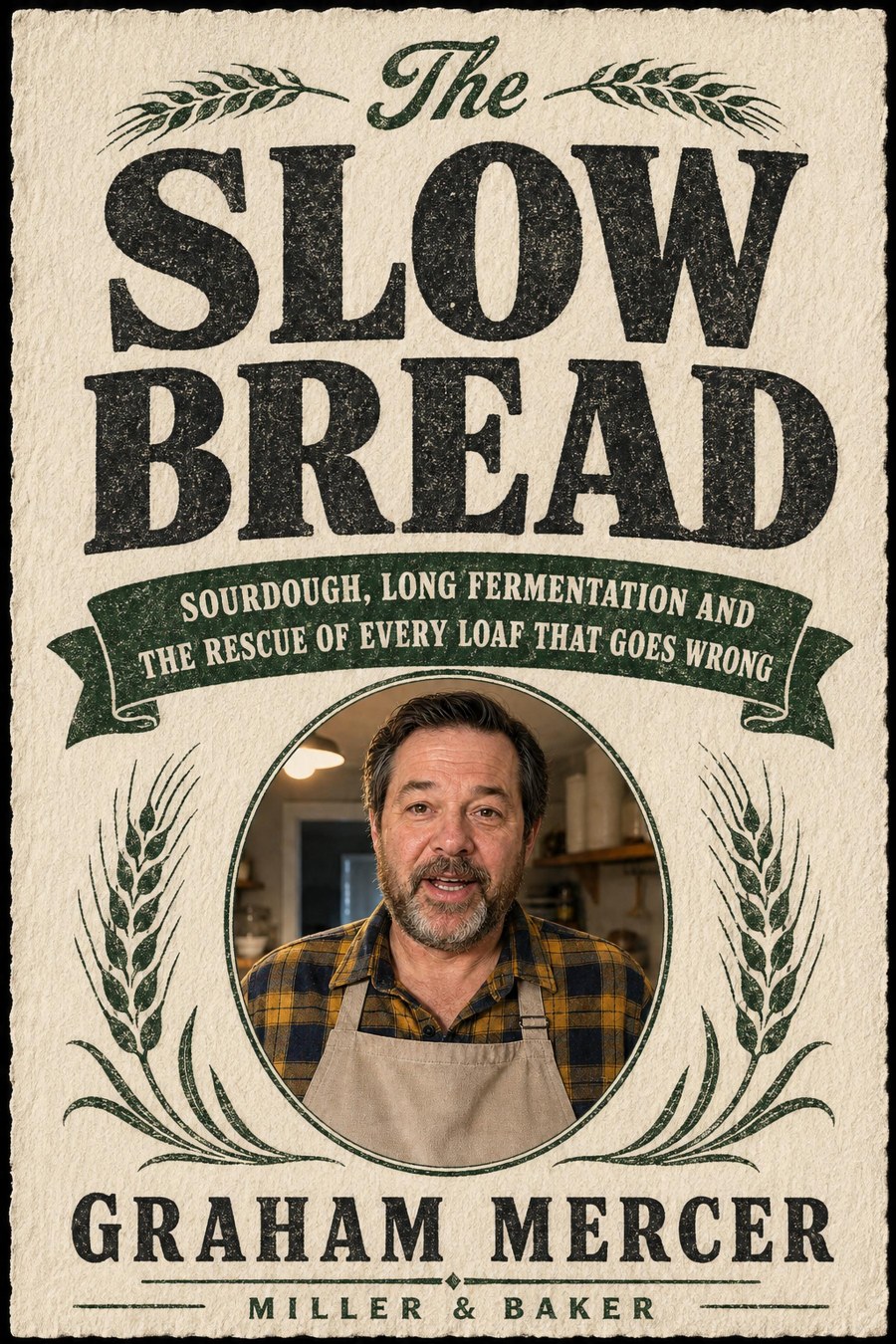
Sourdough, Long Fermentation and the Rescue of Every Loaf That Goes Wrong
"The dough tells you what it needs. Your job is to notice before the oven does."
My grandfather mixed our starter in 1962 and it has never once needed a schedule that ruined a weekend. This book gives you a starter you can trust, ten minutes in the fridge instead of a daily chore, and the one idea that fixes most sourdough trouble: temperature owns the clock. Wet dough, strong shape. What changes when the grain changes. And a chapter on reading the failed loaf, so a gummy crumb or a flat top tells you exactly what to do next time.
60 pages · PDF
Because you don't need all of it on the same day. Book 1 is for the kitchen, the week you decide to bake. Book 2 is for the shop, the day you stand in the aisle or open the online basket. Book 3 is for the month you get a starter and want it to fit your life instead of running it. They don't repeat each other. The $2 Loaf never touches sourdough. Don't Buy That Bread never gives you a recipe. Slow Bread assumes you can already shape a roll. Read them in that order, or read the one your week needs.
Real pages from the books. Tables, baker's percentages, and the plain paragraphs in between.

I ran the same corner bakery for a little over twenty years. Same ovens, same starter, same four-o'clock alarm. I retired at 43 because my knees asked me to, not because I stopped liking the work. I still bake every morning. I still judge a bakery by the sound its crust makes when it cools.
What I believe is simple. Good bread was never meant to be a luxury. A $2 bag of ordinary flour and a bit of patience will outbake most of what sits on the specialty shelf, and I have spent a lot of mornings proving it. I don't sell flour, gadgets, or starter kits. I don't have a smartphone full of apps. I have a wheat patch at the allotment, a wife who says I left the oven on overnight, and three children who still call me the dough whisperer. These books are what I'd tell you across the counter if we had the time.
Already ordered and nothing turned up? Use the support form and we'll sort it.
Yes. Start with The $2 Loaf. It assumes nothing except a bowl, a tin and an oven, and it gives you a five-loaf drill for your first month.
Book 2 and Book 3 are where most experienced bakers spend their time: the flour ledger, the gadget verdicts, temperature-led bulk fermentation, and the failed-loaf chapter.
After payment you land on a page with three download buttons, one per book. A copy of the links goes to your email as well.
PDF. They open on a phone, tablet, laptop, or any e-reader that takes PDFs. You can print them.
No. Every method in Book 1 and Book 3 works with a bowl, your hands, a tin or tray, and an oven. Book 2 tells you which gadgets ever earn their price.
No. Book 1 is straight yeast. Book 3 shows you how to build a starter from flour and water when you're ready.
No. Book 2 covers what labels and certifications actually say. Anything about your health belongs with your doctor, and the books say so.
7 days, full refund, no questions. Use the support form and say you'd like a refund.
A retired corner baker. Twenty-odd years at the counter, a starter from 1962, and strong opinions about scoring. His story is further up the page.
No. One payment, $27, the books are yours.
Three handbooks, 249 pages, $27. Seven days to change your mind.
Get the 3 books · $27